The beginning of Varna Archaeological Museum was laid by a group of socially active figures and teachers from the Boys’ High School in Varna who established a small archaeological collection and thus laid the beginning of study in the history of Varna, Varna Region.
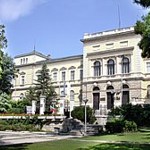
The inauguration of the Varna Archaeological Museum and its further development is closely connected with the names of the two brothers Herman and Karel Škorpil, Czechs by origin, who came to Bulgaria after the Liberation of the country from the Ottoman Rule. In 1901 the Varna Archaeological Society was established. A task of prime importance for the Society was the inauguration of an archaeological museum. As a result of their extensive activity on June 11, 1906 the first exhibition of the Museum was officially opened in a room of the Girls’ High School (the present Archaeological Museum).
In 1945 the Varna Archaeological Museum was declared to be state property. Two other important archaeological sites – the Roman Baths of Odessos and Aladzha Monastery are branches of the Archaeological Museum.
Varna Archaeological Museum now holds over 100,000 various objects. The most significant (about one tenth from the whole collection) are part of the permanent exhibition. The artifacts from the Maesolithic age found near Varna (Middle Paleolithic Age about 10000–7000 BC) are the only ones findings excavated until now which are testimony for a human presence from that time on Bulgarian territory.
Among the most important monument displayed in the Museum is the Varna Eneolithic Necropolis (4600 – 4200 BC). Typical for the Late Eneolithic Age are theso called lake settlements, being now 2,5 – 8 m under the water of the Varna lake, and represented in the museum exposition by numerous ceramic utensils, , tools of bone, stone, numerous religious-related objects, etc. The development of the bronze metallurgy was a particular feature of the the Late Bronze Age (second half of the 2nd millennium BC). Exhibit of a special interest is a bronze sword found in the area of Cherkovna village, dated 13th- 12th c. BC.
The artifacts from the Thracians necropolis are of special importance in the exposition presenting the beginning of Iron Age (12th c. BC).
The artifacts from the period of Greek colonization include some architectural ornaments (ionic columns and capitals) from the 5th c. B.C. Then Odessos flourished as an important center where terracotta figures were produced. The Varna Archaeological museum hosts the richest collection of such figures in Bulgaria.
As part of the medieval culture, the Museum presents the most extensive collection of gold and silver jewelry on the Balkans from the period 13th – 14th c. These items are part of a number of treasures – excellent examples of medieval goldsmith art, found near Dolishte, Varna region. To the treasuries belong two gilded silver chest plates with inscriptions in Greek. They are adorned with bas-reliefs of Blessing Christ and the saints St. George and St. Theodore Stratilatus.